Major U.S. Tariff Changes: Supreme Court Ruling and New 10% Surcharge
The $175 Billion Tariff Reset:
A Definitive Guide to the SCOTUS Ruling, Section 122 Surcharges, and Your Path to Refunds
The landscape of U.S. international trade has just undergone a seismic shift that will define supply chain strategies for the next decade. On February 20, 2026, the United States Supreme Court issued a landmark 6-3 ruling that invalidated billions of dollars in tariffs, triggering a massive scramble for refunds and a rapid pivot by the administration to new legal authorities.
For businesses importing from China, India, and Vietnam, this "Tariff Reset" creates a paradoxical environment: while a new 10% global surcharge has been implemented, the removal of previous punitive duties has actually improved price competitiveness for many. However, for those shipping under DDP or LCL consolidation models, the road to reclaiming overpaid taxes is fraught with technical and legal landmines.
In this comprehensive guide, we break down exactly what changed, who stands to gain, and how to navigate the complex bureaucratic machinery of U.S. Customs to protect your bottom line.
1. The Legal Earthquake: Why the Supreme Court Struck Down IEEPA Tariffs
For the past year, the U.S. trade policy relied heavily on the International Emergency Economic Powers Act (IEEPA). The administration used this act to impose sweeping, country-specific tariffs as a tool for national security and economic leverage.
The SCOTUS Verdict
In the case of Learning Resources Inc. v. Trump, the Supreme Court ruled that the executive branch overstepped its constitutional bounds. The Court clarified that:
The Power to Tax is Reserved for Congress: The Constitution's Taxing Clause explicitly grants the legislative branch the power to levy duties.
IEEPA is Not a Blank Check: While the President can "regulate" importation during emergencies, "regulation" does not include the authority to impose revenue-raising taxes or tariffs without express Congressional consent.
This ruling effectively rendered billions of dollars in collected duties illegal, opening the door for an estimated $130 billion to $175 billion in potential refunds.
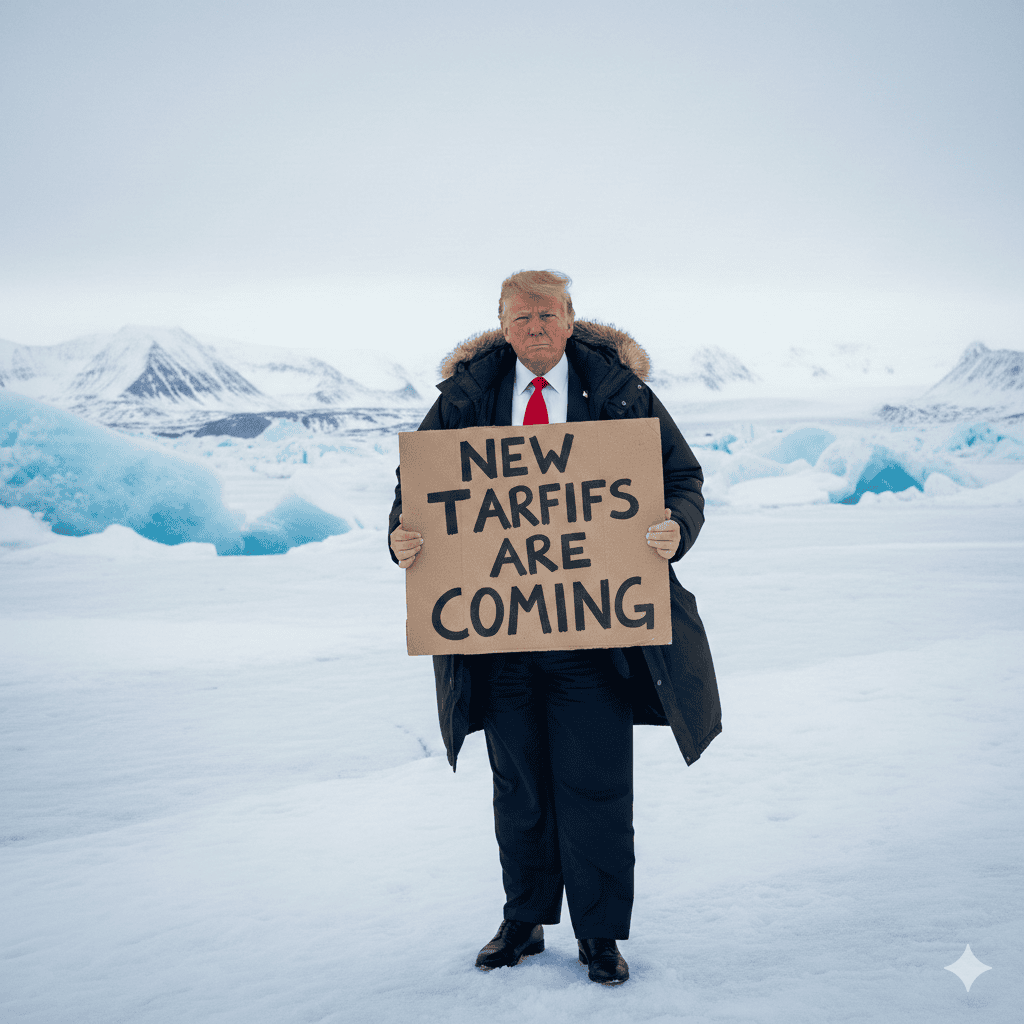
2. The Strategic Pivot: Understanding the New Section 122 Surcharge
The administration did not leave the "tariff gap" open for long. Within days of the ruling, it invoked Section 122 of the Trade Act of 1974 to maintain its trade objectives.
What is Section 122?
Unlike the broad and somewhat vague IEEPA, Section 122 is a specific trade statute designed to address "fundamental international payments problems," such as large U.S. balance-of-payments deficits.
The Current Rate: Initially set at 10% on February 24, 2026, the administration has already signalled an increase to the statutory maximum of 15%.
The 150-Day Clock: Section 122 is temporary by design. It allows the President to impose surcharges for up to 150 days. After this period, the tariffs will expire unless Congress extends them or the administration finds another legal pathway (such as Sections 232 or 301).
Global vs Country-Specific: While IEEPA allows targeting specific nations (such as the "reciprocal" tariffs on China), Section 122 must generally be applied broadly and uniformly to most imports.
3. Regional Winners and Losers: Why China is Gaining Competitiveness
Counterintuitively, the "global" 15% surcharge under Section 122 is actually a win for many Asian exporters compared to the previous regime.
The Winners: China, India, and Vietnam
Under the now-invalidated IEEPA duties, some Chinese imports faced punitive rates of up to 50%. The shift to a flat 10-15% rate significantly lowers the "trade-weighted" tariff burden for these countries.
China: Restoration of price competitiveness in low-value-added sectors like apparel, toys, and furniture.
Vietnam: Strengthening its position as a primary alternative to China by benefiting from the removal of disproportionate IEEPA penalties.
India: A reported 5.6 point drop in effective tariff rates, giving Indian exporters a strategic edge in the U.S. market.
The Neutrals: Japan and South Korea
Nations that already had strategic trade deals or were exempt from previous punitive measures gain little. In fact, under a uniform 15% rate, their effective duty rates might edge slightly higher, though their long-term investment stability remains intact.
4. The $175 Billion Refund Trap: Are You Eligible?
The headline figure of $175 billion in refunds is exciting, but for many importers, it remains out of reach. Eligibility is not determined by who paid for the goods, but by who acted as the legal importer.
The "Importer of Record" (IOR) Requirement
To claim a refund from U.S. Customs and Border Protection (CBP), you must be the Importer of Record (IOR). The IOR is the entity that owns the Customs Bond and is legally responsible for paying duties.
The DDP Shipment Reality
If you ship under Delivered Duty Paid (DDP) terms, you are almost certainly ineligible for a refund.
In DDP: The seller (the exporter) typically acts as the IOR. They pay the duties to the U.S. government and bundle that cost into the price you pay for the goods.
The Consequence: Since the seller is the IOR, they are the ones entitled to the refund. Unless you have a specific legal agreement in your contract regarding tariff rebates, that money will stay with the manufacturer or the freight forwarder who acted as the IOR.
The LCL Consolidation Model from China
For many Amazon sellers and small-to-medium businesses using LCL (Less than Container Load) consolidation, the situation is even more complex.
In a consolidation model, a third-party entity (often a logistics provider) acts as the IOR for the entire container.
Because you are not the actual consignee or IOR on the official customs entry, you have no direct legal standing to demand a refund from CBP.
5. Technical Hurdles: The ACE System and Electronic Refunds
Even if you are the IOR, getting your money back is not as simple as filing a request. The process is being digitized and strictly regulated.
Registration in the ACE System
CBP has announced that all refunds will be issued electronically. This means:
ACE Portal Enrollment: Your business must be properly registered in the Automated Commercial Environment (ACE).
ACH Refund Authorization: You must have a verified U.S. bank account on file within the ACE system to receive Automated Clearing House (ACH) payments.
Meticulous Documentation: You must be able to pull "Entry Summaries" from ACE that show exactly how much IEEPA duty was paid for each shipment over the last year.

6. How to Protect Your Rights: Protests and Litigation
The window for claiming refunds is not infinite. It is tied to a process called Liquidation.
The 180-Day "Protest" Window
When goods enter the U.S., they are not "finalized" immediately. They go through a liquidation process that usually takes about 314 days. Once an entry is liquidated, you have a 180-day window to file a formal "Protest" with CBP.
If you do not file a protest within this timeframe, the duty collection becomes administratively final—even if the underlying law was declared unconstitutional by the Supreme Court.
The 2-5 Year Legal Timeline
The government is likely to fight large-scale payouts. Justice Brett Kavanaugh warned in his dissent that the refund process is likely to be a "mess."
Expect Litigation: Many major corporations, like FedEx, have already filed lawsuits.
The Reality for Smaller Importers: Pursuing these funds could take 2 to 5 years. It may require hiring a specialized trade lawyer to file a lawsuit in the U.S. Court of International Trade (CIT) to preserve your rights while the government sorts out its official refund mechanism.
7. Strategic Recommendations for 2026
Given the daily changes in trade news and the high level of regulatory uncertainty, how should you position your business?
Verify Your Incoterms: If you are currently shipping DDP, consider switching to DAP (Delivered at Place) or DDU (Delivered Duty Unpaid) for future shipments. This allows you to act as the IOR, giving you direct control over your duty payments and future refund eligibility.
Audit Your ACE Portal: Ensure your company is registered and your banking information is current. If you use a broker, verify that they have your ACH information correctly mapped.
Monitor Liquidation Dates: Work with your customs broker to track when your entries from 2025 are liquidating. Don't let the 180-day protest window lapse.
Front-Loading Strategy: With Section 122 likely increasing to 15% soon, many importers are "front-loading" shipments to lock in the current 10% rate before the anticipated hike or further policy shifts in July 2026.
Navigate the Chaos with Expert Support
The "Tariff Reset" of 2026 is one of the most significant events in U.S. trade history. While the potential for refunds is massive, the complexity of the ACE system and the legal barriers for DDP/LCL importers mean that many will walk away empty-handed without a proactive strategy.
Do you have questions about your specific eligibility or how to optimize your China-based supply chain for the new Section 122 surcharges?
Contact our Tariff Experts Today for a data-driven assessment of your trade exposure.
Author Bio: Amit Rosenthal
Amit Rosenthal is a supply chain and logistics specialist with deep experience in international freight, E-commerce fulfilment, and marketplace logistics strategy.
As part of Proboxx, Amit works closely with Amazon and multi-channel sellers to reduce logistics costs, improve inventory flow, and build more resilient supply chains beyond a reliance on default FBA.